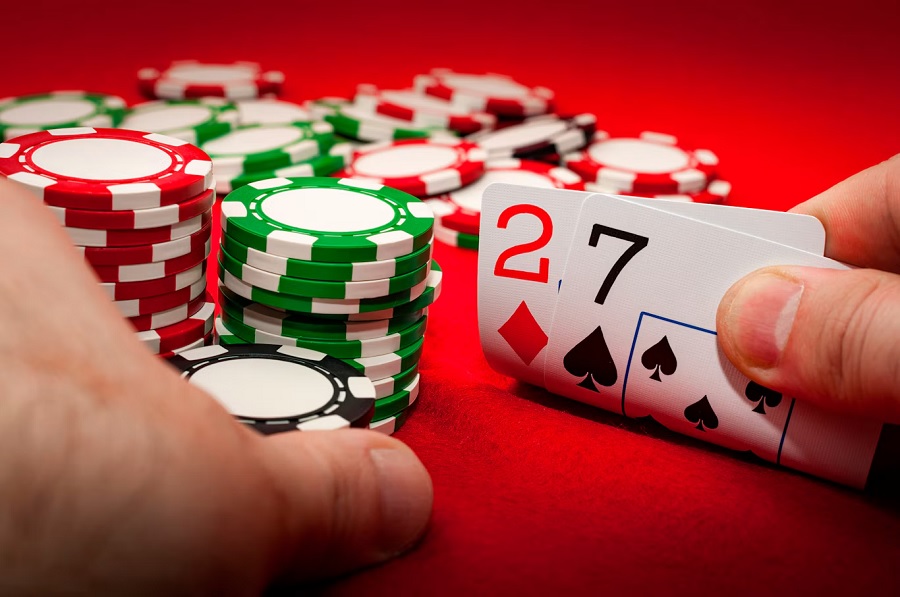
To the casual observer sitting on the rail or watching a televised tournament, poker appears to be a game defined by high-stakes drama, theatrical bluffs, and dramatic river cards. The narrative propagated by mainstream media often focuses on the explosive moments—the shove with king-high, the hero call on the end, or the roar of a champion clutching a massive trophy. Yet, any professional player will tell you that these cinematic moments represent only a microscopic fraction of what actually happens at the felt.
Beneath the flashy surface, poker is a game of prolonged, methodical attrition. It is a grueling mental marathon where the most consequential decisions are often the ones invisible to the spectator: the decision to fold a marginal hand pre-flop, the restraint required to sit quietly through hours of card deadness, and the ironclad discipline needed to walk away after a brutal bad beat without chasing losses. In the unforgiving ecosystem of high-level poker, brilliance with mathematics or game theory is entirely useless without the psychological armor of patience and discipline.
The Cost of Impatience: Understanding Variance and Action Addiction
Human beings possess an innate aversion to boredom. We crave stimulation, engagement, and immediate feedback. This psychological predisposition creates a severe vulnerability in a poker player. In standard Texas Hold’em or Omaha, a player will miss playable starting hands the vast majority of the time. Sitting at a table for an hour without receiving a single premium starting hand is not an anomaly; it is a mathematical certainty that occurs with regularity.
For the undisciplined player, this enforced inactivity is excruciating. Boredom sets in, followed closely by a dangerous psychological state known as action addiction. The player begins rationalizing subpar decisions, convincing themselves that they need to get involved in the pot just to feel something or to prove to the table that they are not afraid to gamble. They start opening marginal holdings from early position, calling three-bets with dominated connectors, or floating flops with zero equity.
This impatience is precisely what profitable professionals feed upon. Every time an impatient opponent plays a sub-optimal hand out of sheer boredom, they are willingly bleeding chips into the rake and toward better-positioned stacks. Patience in poker is not merely a virtue; it is a strictly defensive weapon that preserves capital. The ability to sit motionless, watch chips slide across the table to opponents, and maintain absolute emotional equilibrium while holding garbage cards is the foundational filter that separates winning players from permanent donors.
The Anatomy of Discipline: Mastering Tilt and Emotional Control
While patience governs how a player handles inactivity, discipline governs how they handle adversity. Poker is uniquely punishing because it combines incomplete information with unavoidable variance. A player can make the mathematically correct decision on every single street of a hand, commit their entire stack with a ninety percent equity advantage, and still watch helplessly as an opponent hits a two-outer on the river.
This phenomenon introduces the most destructive force in the game: tilt. Tilt occurs when emotional frustration impairs a player’s rational decision-making capacity, leading to reckless play, oversized bets, and a complete abandonment of strategy. Unchecked tilt can obliterate a carefully managed bankroll in a matter of minutes.
Recognizing the Slippery Slope of Emotional Play
Discipline acts as the circuit breaker against emotional escalation. Professional players develop acute self-awareness regarding their internal state. They recognize the physical and psychological warning signs of tilt—elevated heart rate, cynical internal monologue, muscular tension, or the obsessive desire to punish a specific opponent.
When these symptoms appear, true discipline is demonstrated not by doubling down to exact revenge, but by exercising the ultimate restraint: standing up from the table, stepping away from the screen, or booking a losing session before the emotional damage compounds. Accepting that short-term results are heavily dictated by luck while long-term profitability is dictated by decision quality is the absolute core of poker discipline.
Strategic Restraint: The Power of Pre-Flop Selectivity
The practical application of patience and discipline is most visibly observed in pre-flop hand selection. Amateurs and recreational players routinely overestimate the playability of speculative hands, constantly looking for excuses to enter pots. Disciplined players, conversely, view starting hand selection through the lens of strict discipline and positional advantage.
A disciplined player understands that poker is a game of cumulative edges. By folding trash hands before investing a single chip, they avoid difficult, guessing-game situations on later streets. They reserve their chip commitment for spots where they possess a clear range advantage, positional leverage, and positive expected value.
Navigating the Middle Stages of Tournaments
This restraint becomes doubly critical during deep tournament play. As the blinds and antes escalate, the pressure to accumulate chips mounts exponentially. Inexperienced players often panic, convincing themselves that they are running out of chips and must take a stand with sub-optimal holdings.
A seasoned tournament grinder exercises ironclad discipline by respecting stack-to-pot ratios and ICM implications. They recognize that preserving a healthy stack to bully medium stacks later is infinitely more valuable than committing tournament life on a coin-flip coin-toss with marginal pocket pairs. This ability to suppress short-term panic in favor of long-term survival strategy is what allows elite professionals to consistently navigate massive multi-thousand-person fields down to final tables.
Bankroll Discipline: The Invisible Shield
No discussion of poker discipline is complete without examining the financial infrastructure that supports a player. Mastery at the table is entirely irrelevant if a player lacks the financial discipline to manage their bankroll.
Variance in poker is violently deceptive. Even the greatest players in the world can experience devastating downswings lasting weeks or months, where nothing goes right and every river card spells disaster. Without proper bankroll management—maintaining a strict cushion of buy-ins relative to the stakes played—even a skilled player faces the constant threat of catastrophic ruin.
Bankroll discipline requires removing ego from the equation. It means willingly dropping down in stakes when a downswing depletes the required cushion, refusing to take shots in games beyond one’s financial depth, and treating poker funds as a professional business asset rather than disposable entertainment money. The most talented strategist in the world will eventually go broke if they lack the financial discipline to respect the math of variance.
The Quiet Triumph of Consistency
Ultimately, poker is not won in a single breathtaking session or through one miraculous bluff. It is ground out over tens of thousands of hands, decision by small decision, error by minimized error. The glamorous moments captured on television screens are merely the colorful packaging around a very austere, disciplined reality.
The players who achieve long-term success are those who have mastered their own psychological impulses. They have learned to embrace the quiet, unglamorous periods of folding hand after hand. They have trained themselves to accept bad beats with detached objectivity, and they possess the fierce discipline to protect their capital when emotions run hot. In the end, the quiet restraint to fold a bad hand is far more powerful than the courage to play one.
