5
To the outside observer, the act of placing a high-stakes wager can appear entirely irrational. Watching someone risk hard-earned money on the turn of a card, the spin of a wheel, or the final seconds of a sporting event invites a fundamental question: why do human beings willingly embrace uncertainty and financial risk for the mere possibility of a reward? The answer does not lie within cold economic calculations or probability mathematics. Instead, it is buried deep within the intricate architecture of human psychology, neuroscience, and evolutionary biology.
Gambling is far more than a simple transaction of money for entertainment. It is a powerful psychological dialogue that taps directly into our deepest emotional drivers, our cognitive blind spots, and our neurological wiring. Understanding why people take risks in gambling requires exploring the fascinating intersection of brain chemistry, perception, and behavioral science, revealing how an ancient survival mechanism was co-opted by the modern gaming landscape.
The Neurochemical Engine: Dopamine and the Anticipation Loop
At the absolute center of gambling psychology is dopamine, the neurotransmitter most commonly associated with motivation, learning, and pleasure. For decades, popular culture mistakenly characterized dopamine simply as the brain’s reward chemical, released only when a person wins or achieves a goal. Modern neuroscience has upended that simplistic view, revealing a far more potent reality: dopamine is actually the chemical of anticipation.
Brain imaging studies show that dopamine spikes dramatically not when a reward is received, but in the moments immediately preceding it. In the context of gambling, this means the neurochemical rush peaks while the roulette ball is still bouncing, while the slot reels are still spinning, or while the last leg of a parlay ticket is waiting for the final whistle.
This anticipatory spike creates a powerful reinforcement loop. The human brain learns to crave the state of uncertainty itself. When a win finally occurs, it acts as a punctuation mark on the experience, but the true emotional driver is the suspenseful journey leading up to that outcome. This neurochemical architecture explains why the near-miss—losing by a single point or missing a jackpot symbol by one space—is paradoxically registered by the brain almost identically to an actual win. Instead of discouraging the bettor, a near-miss triggers a surge of dopamine, signaling to the brain that success is just around the corner and encouraging further risk-taking.
Cognitive Biases and the Illusion of Control
While neurochemistry provides the engine, cognitive psychology supplies the steering wheel. Human beings possess a deeply ingrained desire to find patterns, impose order on randomness, and believe in their own agency, even in situations completely governed by mathematical chance. When these mental shortcuts, known as heuristics, encounter the design of gambling environments, they manifest as powerful cognitive biases.
The Illusion of Control
One of the most pervasive biases in gambling behavior is the illusion of control. This phenomenon occurs when individuals believe that their skill, preparation, or personal rituals can influence the outcome of a purely random event. A craps player might throw the dice softly if they want a low number or hard if they need a high one. A slot machine player might develop a superstitious belief that a particular machine is due for a payout because it has been cold all evening. In reality, the mathematics of the game remain entirely unaffected by human ritual, yet the psychological comfort of perceived control is what keeps the bettor engaged.
The Gambler’s Fallacy
Another powerful distortion is the gambler’s fallacy, the erroneous belief that past events can predict independent future outcomes in a random sequence. If a coin lands on heads five times in a row, human intuition strongly insists that tails is overdue on the sixth flip. In a fair game, the odds remain exactly fifty-fifty regardless of history. Yet, the human brain struggles to accept true randomness, constantly searching for balance and equilibrium where none exists. This cognitive miscalculation frequently leads individuals to increase their stakes during a losing streak, falsely believing that a reversal of fortune is mathematically guaranteed.
The Role of Personality and Sensation Seeking
Not all individuals respond to risk in the exact same manner. Psychological research into personality traits has consistently demonstrated that certain people possess an innate predisposition toward high-risk activities. Psychologists refer to this as the sensation-seeking trait, characterized by a continuous need for novel, intense, and complex sensations and experiences, along with the willingness to take physical, social, and financial risks for the sake of such experiences.
Individuals scoring high on the sensation-seeking scale often find traditional, predictable routines profoundly unstimulating. Gambling offers a socially acceptable, highly accessible arena where they can experience intense emotional arousal, tension, and release. For these individuals, the financial outcome is secondary to the psychological intensity of the ride. The risk itself is the product being consumed.
Furthermore, environmental factors and emotional states play a critical role in modulating risk tolerance. Stress, boredom, loneliness, and anxiety can severely impair executive functioning in the prefrontal cortex—the brain region responsible for impulse control and rational decision-making. When emotional vulnerability intersects with the instant accessibility of modern betting platforms, individuals are significantly more likely to take impulsive, high-risk financial gambles that they would ordinarily reject in a calm, grounded state.
Framing and Loss Aversion: The Emotional Weight of Defeat
Behavioral economics has long recognized that human beings do not evaluate risk and reward in a rational, linear fashion. Through the framework of prospect theory, psychologists Daniel Kahneman and Amos Tversky demonstrated that loss aversion is a dominant force in human decision-making: the psychological pain of losing a dollar is roughly twice as intense as the pleasure of winning a dollar.
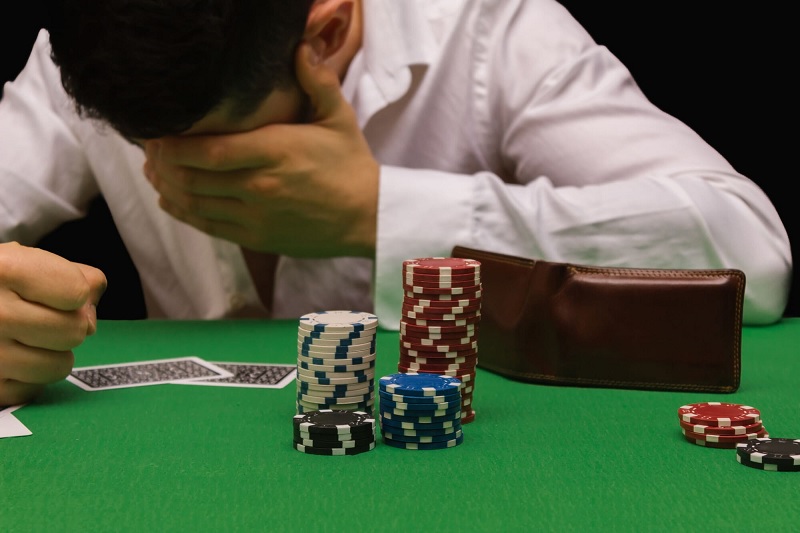
This asymmetry alters how gamblers behave when faced with negative outcomes. Rather than walking away after a loss to protect their remaining resources, individuals frequently enter a state of psychological distress where the primary motivation shifts from making a profit to recovering what was lost. This behavior, commonly known as chasing losses, drives an escalation of commitment. The bettor takes increasingly larger, more reckless risks in an attempt to erase the deficit and restore emotional equilibrium, often digging a much deeper hole in the process.
Navigating the Psychology of Risk
Understanding the intricate psychology behind gambling risk-taking is essential for both individual self-awareness and the broader framework of responsible gaming. Recognizing that our brains are naturally wired to misinterpret randomness, crave anticipatory dopamine, and fall victim to cognitive biases allows individuals to approach gaming with a clear-eyed perspective.
Ultimately, the allure of the wager is a mirror reflecting fundamental aspects of human nature—our attraction to mystery, our desire to test our intuition against fate, and our continuous quest for emotional stimulation. By acknowledging the powerful invisible forces at play beneath the surface of a simple bet, we gain a much deeper appreciation of why the human mind remains eternally fascinated by the roll of the dice.
